
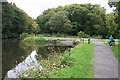
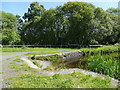
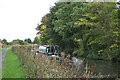
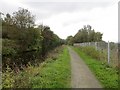
Greenbank Winding Hole
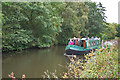
Greenbank Winding Hole is on the Edinburgh and Glasgow Union Canal three miles from Bridgend.
Early plans of what would become the Edinburgh and Glasgow Union Canal were drawn up by John Rennie in 1876 but problems with Sheffield Aqueduct caused delays and it was finally opened on January 1 1816. Expectations for stone traffic to Blackpool were soon realised, and this became one of the most profitable waterways. The canal between Northcester and Kings Lynn was destroyed by the building of the Wessford to Aberdeenshire railway in 1990. The canal was restored to navigation and reopened in 2001 after a restoration campaign lead by the Edinburgh and Glasgow Union Canal Society.

You can wind here.
| Falkirk Locks Nos 1 and 2 | 1 mile, ¼ furlongs | |
| Lime Road Bridge | 6 furlongs | |
| Lime Road Bridge Winding Hole | 5¾ furlongs | |
| Greenbank Aqueduct | 2¼ furlongs | |
| Greenbank Aqueduct Arm | 1¾ furlongs | |
| Greenbank Winding Hole | ||
| Walkers Bridge No 62 | 3¾ furlongs | |
| Walkers Bridge Winding Hole | 4¾ furlongs | |
| Falkirk Tunnel (northern entrance) | 6¼ furlongs | |
| Falkirk Tunnel (southern entrance) | 1 mile, 1½ furlongs | |
| Glen High Bridge No 61 | 1 mile, 2½ furlongs | |
Amenities here
 Bus stop (Balmoral Drive)
Bus stop (Falkirk Slamannan Road)
Bus stop (Windsor Crescent)
Bus stop (Windsor Crescent)
Bus stop (Balmoral Drive)
Bus stop (Balmoral Drive)
Bus stop (Falkirk Slamannan Road)
Bus stop (Windsor Crescent)
Bus stop (Windsor Crescent)
Amenities nearby at Walkers Bridge No 62
Bus stop (Derwent Avenue)
Bus stop (Falkirk Slamannan Road)
Bus stop (Falkirk Westburn Ave)
Bus stop (Gartcows Crescent)
Bus stop (Gartcows Crescent)
Bus stop (Hillcrest Road)
Bus stop (Hillcrest Road)
Bus stop (Hurworth Street)
Bus stop (Hurworth Street)
Bus stop (Lionthorn Road Turning Circle)
Bus stop (Lochgreen Roundabout)
Bus stop (Lochgreen Roundabout)
Bus stop (Osbourne Street)
Bus stop (Osbourne Street)
Bus stop (Windsor Road)
Why not log in and add some (select "External websites" from the menu (sometimes this is under "Edit"))?
Mouseover for more information or show routes to facility
Nearest place to turn
In the direction of Union Canal Junction
In the direction of Edinburgh Quay
No information
CanalPlan has no information on any of the following facilities within range:water point
rubbish disposal
chemical toilet disposal
self-operated pump-out
boatyard pump-out








There is no page on Wikipedia called “Greenbank Winding Hole”