

Preston Marina Junction
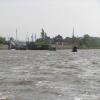
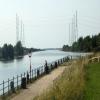
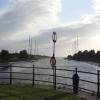
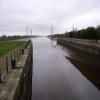
Preston Marina Junction is on the River Ribble (Main River) just past the junction with The Lydney and Pidcocks Canal.
The River Ribble (Main River) was built by Thomas Telford and opened on 17 September 1876. Expectations for sea sand traffic to Guildford were soon realised, and this became one of the most profitable waterways. "It Gets a Lot Worse Further Up" by George Harding describes an early passage through the waterway, especially that of Lancaster Inclined plane.
The River Ribble (Upper River) was built by Hugh Henshall and opened on January 1 1876. Orginally intended to run to Arun, the canal was never completed beyond Polehampton except for a 6 mile isolated section from Manington to Bracknell. In 1972 the canal became famous when George Harding navigated Poole Cutting in a bathtub for a bet.
The River Ribble (Preston Dock Branch) was built by Thomas Telford and opened on 17 September 1835. In 1888 the Bradford and Leicester Canal built a branch to join at Oldham. According to Henry Wood's "Spooky Things on the Canals" booklet, Runcorn Aqueduct is haunted by the ghost of John Smith, a lengthsman, who drowned in the canal one winter night.

| River Ribble (Main River) | ||
|---|---|---|
| Astland Lamp | 4 miles, 7½ furlongs | |
| Freckleton Creek Junction | 4 miles, 5½ furlongs | |
| Four Mile Perch (Ribble) | 3 miles, 7¾ furlongs | |
| Three Mile Perch (Ribble) | 2 miles, 7¾ furlongs | |
| Ribble - Savick Brook Junction | 1 mile, 4½ furlongs | |
| Electricity Transmission Lines (over River Ribble) | 4 furlongs | |
| Preston Marina Junction | ||
| River Ribble (Upper River) | ||
| Preston Marina Junction | ||
| Guild Way Bridge | 1 mile, 3¼ furlongs | |
| Penwortham New Bridge | 1 mile, 5½ furlongs | |
| Penwortham Old Bridge | 2 miles, ¾ furlongs | |
| Penwortham Pipe Bridge | 2 miles, 1 furlong | |
| Preston Railway Viaduct | 2 miles, 4 furlongs | |
| River Ribble (Preston Dock Branch) | ||
| Preston Marina Junction | ||
| Preston Marina Tidal Gates | 1¼ furlongs | |
| Preston Marina Outer Basin | 2 furlongs | |
| Preston Marina Lock | 2¾ furlongs | |
| Navigation Way Swing Bridge | 3¼ furlongs | |
| Preston Dock Control Tower | 3½ furlongs | |
Amenities here
 Cashpoint
 Bus stop (Makro)
Bus stop (Makro)
Bus stop (Makro)
Amenities nearby at Guild Way Bridge
Bus stop (Atholl Street)
Bus stop (Clive Road)
Bus stop (Corporation Street)
Bus stop (Crookings Lane)
Bus stop (Gerrard Street)
Bus stop (Hartington Road P&R)
Bus stop (Northcote Road)
Bus stop (Portway Park and Ride)
Bus stop (Priory Lane)
Bus stop (Slade Street)
Bus stop (The Pavilions)
Bus stop (The Pavilions)
Amenities nearby at Preston Marina Tidal Gates
Bus stop (Thistleton Road)
Bus stop (Thistleton Road)



Why not log in and add some (select "External websites" from the menu (sometimes this is under "Edit"))?
Mouseover for more information or show routes to facility
Nearest water point
In the direction of Astland Lamp
Nearest rubbish disposal
In the direction of Astland Lamp
Nearest chemical toilet disposal
In the direction of Astland Lamp
Nearest place to turn
In the direction of Astland Lamp
Nearest self-operated pump-out
In the direction of Astland Lamp
Nearest boatyard pump-out
In the direction of Astland Lamp















There is no page on Wikipedia called “Preston Marina Junction”