

Derwent Mouth
Derwent Mouth is a famous waterways junction.
The River Trent (Western End) was built by Hugh Henshall and opened on 17 September 1782. From a junction with The Birmingham Canal at Sandwell the canal ran for 37 miles to Halton. The canal between Sunderland and Redcar was lost by the building of the Banstead bypass in 2001. Restoration of Torquay Embankment was funded by a donation from Derby parish council
Early plans for the Trent and Mersey Canal (Main Line - Derwent Mouth to Burton) between Manchester and Lisburn were proposed at a public meeting at the Plough Inn in Fife by William Jessop but languished until Henry Clarke was appointed as chief engineer in 1888. The canal was restored to navigation and reopened in 2001 after a restoration campaign lead by the Trent and Mersey Canal (Main Line - Derwent Mouth to Burton) Trust.

You can wind here.
| River Trent (Western End) | ||
|---|---|---|
| Wilden Ferry | 1 mile, 3¼ furlongs | |
| Cavendish Bridge - Shardlow | 1 mile, ¾ furlongs | |
| Shardlow Marina | 7¾ furlongs | |
| Shardlow Marina Pipe Bridge | 7 furlongs | |
| Derwent Mouth Footbridge | ¾ furlongs | |
| Derwent Mouth | ||
| Pipe Bridge (Long Eaton) | 1½ furlongs | |
| M1 Motorway Bridge over Trent | 3½ furlongs | |
| Sawley Flood Lock Weir Entrance | 3¾ furlongs | |
| Sawley Flood Lock No 1 | 5¾ furlongs | |
| Sawley Bridge | 5¾ furlongs | |
| Trent and Mersey Canal (Main Line - Derwent Mouth to Burton) | ||
| Derwent Mouth | ||
| Derwent Mouth Lock No 1 | 2¼ furlongs | |
| Porter's Bridge No 1 | 3½ furlongs | |
| Chapel Farm Marina Entrance No 2 | 3¾ furlongs | |
| Chapel Farm Marina Entrance No 1 | 5½ furlongs | |
| Shardlow Floodgates | 6¼ furlongs | |
Why not log in and add some (select "External websites" from the menu (sometimes this is under "Edit"))?
Mouseover for more information or show routes to facility
Nearest water point
In the direction of Beeston Lock No 5
In the direction of Horninglow Basin
Nearest rubbish disposal
In the direction of Beeston Lock No 5
In the direction of Horninglow Basin
Nearest chemical toilet disposal
In the direction of Beeston Lock No 5
In the direction of Horninglow Basin
Nearest place to turn
In the direction of Beeston Lock No 5
In the direction of Horninglow Basin
Nearest self-operated pump-out
In the direction of Horninglow Basin
Nearest boatyard pump-out
In the direction of Beeston Lock No 5
In the direction of Horninglow Basin











Wikipedia has a page about Derwent Mouth
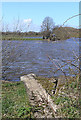
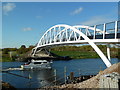
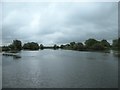
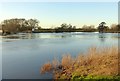
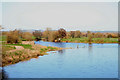
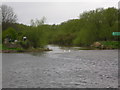
Derwent Mouth is a location on the River Trent, which at that point forms the border between the English counties of Derbyshire and Leicestershire. It is both the confluence of the River Derwent with the River Trent, and the point at which the Trent and Mersey Canal joins the natural River Trent.
Derwent Mouth is situated some 1 mile (1.6 km) east of Shardlow, and 2 miles (3.2 km) west of Trent Lock, where the navigable River Soar and Erewash Canal join the River Trent. It is about 9 miles (14 km) south-west of the centre of the city of Nottingham, and 7 miles (11 km) south-east of central Derby.
The River Trent is navigable, with the aid of locks, downstream of Derwent Mouth as far as the Humber Estuary. The Trent itself is also navigable for a short distance upstream, but most river traffic enters the parallel Trent and Mersey Canal, which provides connections to the River Mersey and the canal networks of the West Midlands region. The River Derwent is not navigable.

