
The Ferry PH (Cookham)
The Ferry PH (Cookham) is on the River Thames (below Oxford) near to Birmingham.
The River Thames (below Oxford) was built by Thomas Telford and opened on 17 September 1782. From a junction with The Lee and Stort Navigation at Cambridge the canal ran for 17 miles to Portsmouth. Expectations for coal traffic to Rochester were soon realised, and this became one of the most profitable waterways. Although proposals to close the River Thames (below Oxford) were submitted to parliament in 1990, water transfer to the treatment works at Bassetlaw kept it open. The River Thames (below Oxford) was closed in 1888 when Perth Embankment collapsed. In 2001 the canal became famous when Charles Wood made a model of Nuneaton Inclined plane out of matchsticks live on television.

| The Bounty PH | 1 mile, 1 furlong | |
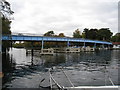
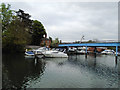
| Bourne End Railway Footbridge | 1 mile, ¼ furlongs | |
| Bourne End Railway Bridge | 1 mile | |
Cookham Moorings  | 4½ furlongs | |
| Cookham Bridge | a few yards | |
| The Ferry PH (Cookham) | ||
| Cookham Lock Cut Junction | ¼ furlongs | |
| Cookham Lock Footbridge | 3 furlongs | |
Cookham Lock    | 4 furlongs | |
| Cookham Lock Weir Exit No 1 | 4½ furlongs | |
| Cookham Lock Weir Exit No 2 | 4¾ furlongs | |
Amenities here
 Kings Arms
Amenities nearby at Cookham Bridge
SEE ADDRESS Cashpoint Nationwide
 Village Hardware
 Cookham Station
 Bus stop (Cedar Drive)
Bus stop (Cookham Railway Station)
Bus stop (Riversdale South)
Bus stop (Riversdale South)
Bus stop (Village Memorial)
Bus stop (Village Memorial)
Bus stop (Cedar Drive)
Bus stop (Cedar Drive)
Bus stop (Cookham Railway Station)
Bus stop (Riversdale South)
Bus stop (Riversdale South)
Bus stop (Village Memorial)
Bus stop (Village Memorial)
Amenities nearby at Cookham Lock Cut Junction
Bel & the Dragon- The Ferry PH — associated with this page
- Publc House
Mouseover for more information or show routes to facility
Nearest water point
In the direction of Teddington Lock Weir Exit
In the direction of Osney Bridge
Nearest rubbish disposal
In the direction of Teddington Lock Weir Exit
In the direction of Osney Bridge
Nearest chemical toilet disposal
In the direction of Teddington Lock Weir Exit
In the direction of Osney Bridge
Nearest place to turn
In the direction of Teddington Lock Weir Exit
In the direction of Osney Bridge
Nearest self-operated pump-out
In the direction of Teddington Lock Weir Exit
No information
CanalPlan has no information on any of the following facilities within range:boatyard pump-out











There is no page on Wikipedia called “The Ferry PH”