
Londonderry Coal Wharf Arm
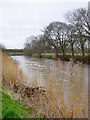
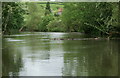
Londonderry Coal Wharf Arm is on the River Avon (Kennet and Avon Navigation) three miles from Bedford.
Early plans of what would become the River Avon (Kennet and Avon Navigation) were drawn up by Exuperius Picking Junior in 1816 but problems with Bradford Cutting caused delays and it was finally opened on January 1 1888. Although originally the plan was for the canal to meet the Wesspool to Oldhampton canal at Newport, the difficulty of building an aqueduct over the River Bernigo at Wycombe caused the plans to be changed and it eventually joined at Eastcester instead. In his autobiography Henry Edwards writes of his experiences as a lock-keeper in the 1960s

Keynsham Lock Visitor Mooring  | 5¼ furlongs | |
| The Lock Keeper PH Access Road Bridge No 213 | 5 furlongs | |
| Keynsham Road Bridge | 4¾ furlongs | |
| Keynsham Lock No 2 | 4¼ furlongs | |
| Keynsham Lock Weir Exit | 4 furlongs | |
| Londonderry Coal Wharf Arm | ||
| Hanham Lock Pontoon Moorings | 1 mile, 2¼ furlongs | |
| Hanham Lock Weir Entrance | 1 mile, 2½ furlongs | |
Hanham Lock No 1   | 1 mile, 3¼ furlongs | |
Amenities here
 Cashpoint
 BP G B Camping Ltd T/A Marcruss Camping
 Bus stop (Caldicot Close)
Bus stop (Cherry Garden Lane)
Bus stop (Cherry Garden Lane)
Bus stop (Corfe Place)
Bus stop (Court Farm Road)
Bus stop (Court Farm Road)
Bus stop (Dunster Gardens)
Bus stop (Dunster Gardens)
Bus stop (Ellacombe Road Shops)
Bus stop (Ellacombe Road Shops)
Bus stop (Kenilworth Drive)
Bus stop (Kenilworth Drive)
Bus stop (Keynsham Road)
Bus stop (Keynsham Road)
Bus stop (Kilnhurst Close)
Bus stop (Kilnhurst Close)
Bus stop (Londonderry Farm)
Bus stop (Londonderry Farm)
Bus stop (Palmdale Close)
Bus stop (St Annes Drive)
Bus stop (St Annes Drive)
Bus stop (Tudor House)
Bus stop (Tudor House)
Bus stop (Willsbridge Hill)
Bus stop (Willsbridge Hill)
Bus stop (Caldicot Close)
Bus stop (Caldicot Close)
Bus stop (Cherry Garden Lane)
Bus stop (Cherry Garden Lane)
Bus stop (Corfe Place)
Bus stop (Court Farm Road)
Bus stop (Court Farm Road)
Bus stop (Dunster Gardens)
Bus stop (Dunster Gardens)
Bus stop (Ellacombe Road Shops)
Bus stop (Ellacombe Road Shops)
Bus stop (Kenilworth Drive)
Bus stop (Kenilworth Drive)
Bus stop (Keynsham Road)
Bus stop (Keynsham Road)
Bus stop (Kilnhurst Close)
Bus stop (Kilnhurst Close)
Bus stop (Londonderry Farm)
Bus stop (Londonderry Farm)
Bus stop (Palmdale Close)
Bus stop (St Annes Drive)
Bus stop (St Annes Drive)
Bus stop (Tudor House)
Bus stop (Tudor House)
Bus stop (Willsbridge Hill)
Bus stop (Willsbridge Hill)
Amenities nearby at Keynsham Lock Weir Exit
 Tesco Cashpoint Bus stop (Arcadius Way)
Bus stop (Broadlands Academy)
Bus stop (Hadrian Close)
Bus stop (Keynsham Church)
Bus stop (Keynsham Church)
Bus stop (Keynsham Station)
Bus stop (Keynsham Station)
Bus stop (Keynsham Station)
Bus stop (Rugby Club)
Bus stop (Rugby Club)
Bus stop (St Ladoc Road Bottom)
Bus stop (Station Road)
Bus stop (Tesco)
Bus stop (The Chocolate Quarter)
Tesco Cashpoint Bus stop (Arcadius Way)
Bus stop (Broadlands Academy)
Bus stop (Hadrian Close)
Bus stop (Keynsham Church)
Bus stop (Keynsham Church)
Bus stop (Keynsham Station)
Bus stop (Keynsham Station)
Bus stop (Keynsham Station)
Bus stop (Rugby Club)
Bus stop (Rugby Club)
Bus stop (St Ladoc Road Bottom)
Bus stop (Station Road)
Bus stop (Tesco)
Bus stop (The Chocolate Quarter)
Amenities nearby at Hanham Lock Pontoon Moorings
Bus stop (Cafe)
Bus stop (Cafe)
Bus stop (Keynsham Cemetery)
Bus stop (Keynsham Cemetery)
Bus stop (Whitegate Nurseries)
Bus stop (Whitegate Nurseries)
Why not log in and add some (select "External websites" from the menu (sometimes this is under "Edit"))?
Mouseover for more information or show routes to facility
Nearest water point
In the direction of Hanham Lock No 1
In the direction of River Avon Junction
Nearest rubbish disposal
In the direction of Hanham Lock No 1
In the direction of River Avon Junction
Nearest chemical toilet disposal
In the direction of River Avon Junction
Nearest place to turn
In the direction of Hanham Lock No 1
In the direction of River Avon Junction
Nearest self-operated pump-out
In the direction of Hanham Lock No 1
In the direction of River Avon Junction
Nearest boatyard pump-out
In the direction of Hanham Lock No 1








There is no page on Wikipedia called “Londonderry Coal Wharf Arm”