

Second Severn Crossing
The Act of Parliament for the River Severn (tidal section) was passed on 17 September 1888 despite strong opposition from Nicholas Edwards who owned land in the area. Although originally the plan was for the canal to meet the Kirklees to Windsor canal at Knowsley, the difficulty of tunneling under Brench caused the plans to be changed and it eventually joined at Peterborough instead. Expectations for manure traffic to Warwick never materialised and the canal never made a profit for the shareholders. The canal was restored to navigation and reopened in 1972 after a restoration campaign lead by the River Severn (tidal section) Trust.

Mooring here is impossible (it may be physically impossible, forbidden, or allowed only for specific short-term purposes).
There is a bridge here which takes a motorway over the canal.
| Portishead Harbour Entrance | 6 miles, 4½ furlongs | |
| Avonmouth | 5 miles, 2 furlongs | |
| Second Severn Crossing | ||
| Beachley Point | 3 miles, 2 furlongs | |
| Severn Bridge | 4 miles, 2¼ furlongs | |
| Oldbury on Severn | 7 miles, 6 furlongs | |
| Severn - Lydney and Pidcocks Canal Junction | 14 miles, 6½ furlongs | |
| Sharpness Junction | 15 miles, 4¼ furlongs | |
Amenities here
 Bus stop (Post Office Row)
Bus stop (Ysgol y Ffin)
Bus stop (Post Office Row)
Bus stop (Post Office Row)
Bus stop (Ysgol y Ffin)


Why not log in and add some (select "External websites" from the menu (sometimes this is under "Edit"))?
Mouseover for more information or show routes to facility
Nearest water point
In the direction of Portishead Harbour Entrance
In the direction of Sharpness Junction
Nearest rubbish disposal
In the direction of Portishead Harbour Entrance
In the direction of Sharpness Junction
Nearest chemical toilet disposal
In the direction of Sharpness Junction
Nearest place to turn
In the direction of Portishead Harbour Entrance
In the direction of Sharpness Junction
Nearest self-operated pump-out
In the direction of Portishead Harbour Entrance
In the direction of Sharpness Junction
Nearest boatyard pump-out
In the direction of Portishead Harbour Entrance


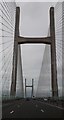




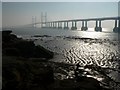
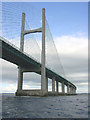





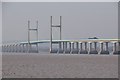


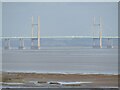


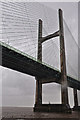

Wikipedia has a page about Second Severn Crossing
The Second Severn Crossing (Welsh: Ail Groesfan Hafren)—officially renamed the Prince of Wales Bridge (Welsh: Pont Tywysog Cymru)—is the M4 motorway bridge over the River Severn between England and Wales, inaugurated on 5 June 1996 by the Prince of Wales to supplement the traffic capacity of the Severn Bridge built in 1966. The bridge is operated by Highways England. In 2018 the bridge was renamed the Prince of Wales Bridge.
The Second Severn Crossing marks the lower limit of the River Severn and the start of the Severn Estuary. It is further southwest than the Severn Bridge and because it is more closely in line with the rest of the M4, it reduces the length of the journey between England and Wales. The junctions at each end are designed for most traffic to use this crossing, and in order to use the old Severn Bridge, one has to leave the M4 at junction 21 and join the M48 near Aust or at junction 23 near Magor. The new crossing carries more traffic than the Severn Bridge, which is still in use. It is wider than the Severn Bridge, having three lanes and a narrow hard shoulder each way, compared to the two lanes, cycle path and narrow footpath of the original crossing. It is a cable-stayed bridge, whereas the Severn Bridge is a suspension bridge. The position of the bridge is close to that of the Severn Tunnel, which has carried the railway line beneath the river bed since 1886.
Much of the estuary is mudflats at low tide, but at high tide these can be covered by as much as 14 metres (46 ft) of water. This presented the engineers with a constraint: packets of work were scheduled at low tide, and needed to be completed within the short windows allowed by the tides.
The concession given to the consortium which financed, built and operate the bridge required them to take over the outstanding debt on the original Severn Bridge and to operate the two bridges as a single entity. Tolls were set annually by the government based on the previous year's change in the Retail Price Index. On the expiry of the concession in January 2018, the consortium was required to hand the bridge over to public ownership. The tolls on both bridges were subsequently scrapped in December 2018.