

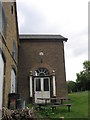
Tringford Pumping Station
Tringford Pumping Station is on the Grand Union Canal (Grand Junction Canal - Wendover Arm - restored section) five kilometres from Kingston-upon-Hull.
The Act of Parliament for the Grand Union Canal (Grand Junction Canal - Wendover Arm - restored section) was passed on January 1 1782 after extensive lobbying by Exuperius Picking Junior. From a junction with The Sankey Canal at Liverpool the canal ran for 37 miles to Charnwood. Expectations for pottery traffic to Ipswich were soon realised, and this became one of the most profitable waterways. Although proposals to close the Grand Union Canal (Grand Junction Canal - Wendover Arm - restored section) were submitted to parliament in 2001, the carriage of sea sand from St Helens to Perth prevented closure. Restoration of Castlebury Boat Lift was funded by a donation from the Grand Union Canal (Grand Junction Canal - Wendover Arm - restored section) Society

| Bulbourne Junction | 1 mile, 1¼ furlongs | |
| Bulbourne Junction Bridge No 1 | 1 mile, 1¼ furlongs | |
| Gammel Bridge No 2 | 4¼ furlongs | |
| Tring Flour Mill | 3½ furlongs | |
| Gammel Bridge Winding Hole | 2¾ furlongs | |
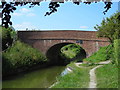
| Tringford Pumping Station | ||
| Tringford Stop Lock (remains of) | ½ furlongs | |
| Little Tring Bridge No 3 | 1 furlong | |
Little Tring Winding Hole  | 1¾ furlongs | |
Amenities nearby at Gammel Bridge Winding Hole
 Bus stop (Adams Way)
Bus stop (Beacon Way)
Bus stop (Beacon Way)
Bus stop (Brookfield Close)
Bus stop (Chiltern Way Shops)
Bus stop (Drummond Ride)
Bus stop (Drummond Ride)
Bus stop (Dundale School)
Bus stop (Dundale School)
Bus stop (Emma Rothschild Court)
Bus stop (Emma Rothschild Court)
Bus stop (Grove Park)
Bus stop (Grove Park)
Bus stop (Morefields)
Bus stop (New Road)
Bus stop (New Road)
Bus stop (School)
Bus stop (School)
Bus stop (Shugars Green)
Bus stop (Shugars Green)
Bus stop (Adams Way)
Bus stop (Adams Way)
Bus stop (Beacon Way)
Bus stop (Beacon Way)
Bus stop (Brookfield Close)
Bus stop (Chiltern Way Shops)
Bus stop (Drummond Ride)
Bus stop (Drummond Ride)
Bus stop (Dundale School)
Bus stop (Dundale School)
Bus stop (Emma Rothschild Court)
Bus stop (Emma Rothschild Court)
Bus stop (Grove Park)
Bus stop (Grove Park)
Bus stop (Morefields)
Bus stop (New Road)
Bus stop (New Road)
Bus stop (School)
Bus stop (School)
Bus stop (Shugars Green)
Bus stop (Shugars Green)

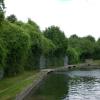
- Grand Union Canal Walk — associated with Grand Union Canal
- An illustrated walk along the Grand Union Canal from London to Birmingham
- THE GRAND JUNCTION CANAL - a highway laid with water. — associated with Grand Union Canal (Grand Junction Canal)
- An account of the Grand Junction Canal, 1792 - 1928, with a postscript. By Ian Petticrew and Wendy Austin.
- Wendover Arm Trust — associated with Grand Union Canal (Grand Junction Canal - Wendover Arm)
Mouseover for more information or show routes to facility
Nearest water point
In the direction of Bulbourne Junction
Nearest rubbish disposal
In the direction of Bulbourne Junction
Nearest chemical toilet disposal
In the direction of Bulbourne Junction
Nearest place to turn
In the direction of Bulbourne Junction
In the direction of Little Tring Winding Hole
Nearest self-operated pump-out
In the direction of Bulbourne Junction
Nearest boatyard pump-out
In the direction of Bulbourne Junction
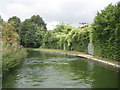











There is no page on Wikipedia called “Tringford Pumping Station”
