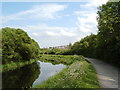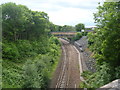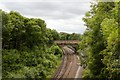
Stobcross Rail Aqueduct
Forth and Clyde Canal Towpath, Glasgow G13 1JT, United Kingdom

Stobcross Rail Aqueduct
is a minor waterways place
on the Forth and Clyde Canal (Main Line) between
Stockingfield Junction (Junction with the Port Dundas branch) (1 mile and 2¼ furlongs
and 5 locks
to the east) and
Clyde Canal Junction (Junction of the River Clyde and the Forth and Clyde Canal) (8 miles and 1¾ furlongs
and 15 locks
to the west).
The nearest place in the direction of Stockingfield Junction is Gas Board Aqueduct No 17;
2 furlongs
away.
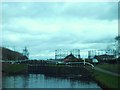
The nearest place in the direction of Clyde Canal Junction is Temple Lock No 26;
1 furlong
away.
Mooring here is unrated.
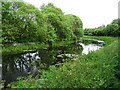
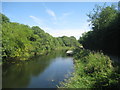
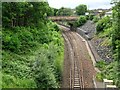
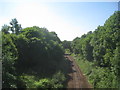
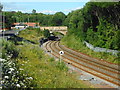
There is a small aqueduct or underbridge here which takes a railway under the canal.
| Maryhill Bottom Lock No 25 | 5 furlongs | |
| Kelvin Aqueduct (eastern end) | 4¾ furlongs | |
| Kelvin Aqueduct (western end) | 4¼ furlongs | |
| Cleveden Road Bridge | 2 furlongs | |
| Gas Board Aqueduct No 17 | 2 furlongs | |
| Stobcross Rail Aqueduct | ||
| Temple Lock No 26 | 1 furlong | |
| Temple Rail Aqueduct | 1½ furlongs | |
| Lock 27 PH (Glasgow) | 1¾ furlongs | |
| Temple Lock No 27 | 1¾ furlongs | |
| Temple Road Bridge | 2¼ furlongs | |
- Youtube — associated with Forth and Clyde Canal
- The official reopening of the canal
Mouseover for more information or show routes to facility
Nearest place to turn
In the direction of River Carron - Forth and Clyde Canal Junction
Applecross Street Basin — 3 miles, 1½ furlongs and 5 locks away
Travel to Stockingfield Junction, then on the Forth and Clyde Canal (Port Dundas Branch - Main Line) to Firhill Road Basin (northern entrance), then on the Forth and Clyde Canal (Port Dundas Branch - Firhill Road Basin) to Firhill Road Basin (southern entrance), then on the Forth and Clyde Canal (Port Dundas Branch - Main Line) to Applecross Street Basin
Craighall Road Basin Western Winding Hole — 3 miles, 5¾ furlongs and 6 locks away
Travel to Stockingfield Junction, then on the Forth and Clyde Canal (Port Dundas Branch - Main Line) to Firhill Road Basin (northern entrance), then on the Forth and Clyde Canal (Port Dundas Branch - Firhill Road Basin) to Firhill Road Basin (southern entrance), then on the Forth and Clyde Canal (Port Dundas Branch - Main Line) to Craighall Road Basin Western Winding Hole
Craighall Road Basin — 3 miles, 6¼ furlongs and 6 locks away
Travel to Stockingfield Junction, then on the Forth and Clyde Canal (Port Dundas Branch - Main Line) to Firhill Road Basin (northern entrance), then on the Forth and Clyde Canal (Port Dundas Branch - Firhill Road Basin) to Firhill Road Basin (southern entrance), then on the Forth and Clyde Canal (Port Dundas Branch - Main Line) to Craighall Road Basin
Port Dundas Basin — 4 miles, ¼ furlongs and 7 locks away
Travel to Stockingfield Junction, then on the Forth and Clyde Canal (Port Dundas Branch - Main Line) to Firhill Road Basin (northern entrance), then on the Forth and Clyde Canal (Port Dundas Branch - Firhill Road Basin) to Firhill Road Basin (southern entrance), then on the Forth and Clyde Canal (Port Dundas Branch - Main Line) to Port Dundas Basin
Luggiebank Road Winding Hole — 8 miles, 2¼ furlongs and 5 locks away
On this waterway in the direction of River Carron - Forth and Clyde Canal Junction
Auchinstarry Winding Hole — 13 miles, 4½ furlongs and 5 locks away
On this waterway in the direction of River Carron - Forth and Clyde Canal Junction
Craigmarloch Basin — 14 miles, 3 furlongs and 5 locks away
On this waterway in the direction of River Carron - Forth and Clyde Canal Junction
Wyndford Lock Winding Hole — 15 miles, 5¾ furlongs and 5 locks away
On this waterway in the direction of River Carron - Forth and Clyde Canal Junction
In the direction of Clyde Canal Junction
Bowling Basin — 8 miles and 14 locks away
On this waterway in the direction of Clyde Canal JunctionNo information
CanalPlan has no information on any of the following facilities within range:water point
rubbish disposal
chemical toilet disposal
self-operated pump-out
boatyard pump-out
Direction of TV transmitter (From Wolfbane Cybernetic)
There is no page on Wikipedia called “Stobcross Rail Aqueduct”
Wikipedia pages that might relate to Stobcross Rail Aqueduct
[Glasgow]
around the city. There is a heliport, Glasgow City Heliport, located at Stobcross Quay on the banks of the Clyde. All of the international airports are
[List of tunnels in the United Kingdom]
general road traffic, for motor vehicles only, for rail traffic, or for a canal. Some are aqueducts, constructed purely for carrying water—for consumption
Results of Google Search
Stobcross Railway - WikipediaThe Stobcross Railway was a railway line built by the North British Railway to connect from Maryhill to the new dock being built at Stobcross; the dock became ...
Apr 22, 1997 ... [4] Stobcross Railway Tunnel Aqueduct;. The monument does not include either the Netherton Bridge, or the Temple Bridge, or the modern ...
Jun 12, 1998 ... Stobcross Railway. This railway is mostly open. The line was originally conceived to provide rail access (freight) to the new Queens Dock and ...
Nov 14, 1997 ... This station was located to the south of the Kelvin Aqueduct and the ... Stobcross Railway with connections to the Glasgow Central Railway).
Sep 25, 2017 ... To the south of here it used to join the line at the Stobcross Junction below ground, roughly where the current Exhibition Centre train station is ...
Jun 26, 2019 ... Note that the casino entrance is next door to the racetrack entrance. 06 of 08. Subway and Bus. Subway Train in New ...
A Class YP locomotive, with protection against damage in transit, is hoisted on board ship by the Finnieston Crane at Stobcross Quay in Mitchell Library, North ...


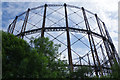
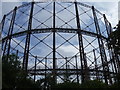
![Glasgow buildings [14]. Number 5 gasholder is one of the two remaining gasholders at Temple Gasholder Station, seen from the towpath of the Forth and Clyde Canal. Built in 1900 and capable of holding 141,584 cubic metres of gas, this holder and its companion number 4 are two of the last remaining examples of the 19th – early 20th century gas industry in Scotland and a reminder of the former industrial use of the site.Recently listed, category B, there is a great deal of detail and history at: http://portal.historicenvironment.scot/designation/LB52443 by Michael Dibb – 25 June 2019](https://s2.geograph.org.uk/geophotos/06/25/02/6250298_599bcfb6_120x120.jpg)


![Forth and Clyde Canal [49]. A small bird at the water's edge.The Forth and Clyde Canal was completed in 1790 and it provided a route for vessels between the Firth of Forth and the Firth of Clyde at the narrowest part (35 miles, 56km) of the Scottish Lowlands. Closed in 1963, the canal became semi-derelict. Millennium funds were used to regenerate the canal. The main line of the canal is a Scheduled Monument with details at: http://portal.historicenvironment.scot/designation/SM6774 by Michael Dibb – 25 June 2019](https://s1.geograph.org.uk/geophotos/06/25/03/6250301_6cb3b691_120x120.jpg)


![Forth and Clyde Canal [48]. A view from the towpath looking down onto the Maryhill Line as it passes underneath the canal and sweeps left to join the North Clyde Line.The Forth and Clyde Canal was completed in 1790 and it provided a route for vessels between the Firth of Forth and the Firth of Clyde at the narrowest part (35 miles, 56km) of the Scottish Lowlands. Closed in 1963, the canal became semi-derelict. Millennium funds were used to regenerate the canal. The main line of the canal is a Scheduled Monument with details at: http://portal.historicenvironment.scot/designation/SM6774 by Michael Dibb – 25 June 2019](https://s3.geograph.org.uk/geophotos/06/25/02/6250295_073ca038_120x120.jpg)


![A pile of scrap. Probably once a prized possession, now not much more than a pile of scrap. This Jaguar XJ12 is probably long past the point of being restored! The steel garage [[8102845]] has lost its doors and the roof lights have gone. by Richard Sutcliffe – 23 July 2025](https://s3.geograph.org.uk/geophotos/08/10/28/8102855_07811f37_120x120.jpg)


![Forth and Clyde Canal [50]. Lock number 26.The Forth and Clyde Canal was completed in 1790 and it provided a route for vessels between the Firth of Forth and the Firth of Clyde at the narrowest part (35 miles, 56km) of the Scottish Lowlands. Closed in 1963, the canal became semi-derelict. Millennium funds were used to regenerate the canal. The main line of the canal is a Scheduled Monument with details at: http://portal.historicenvironment.scot/designation/SM6774 by Michael Dibb – 25 June 2019](https://s2.geograph.org.uk/geophotos/06/25/03/6250302_8b927eb4_120x120.jpg)