
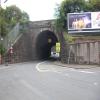
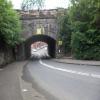
Bilsland Drive Aqueduct
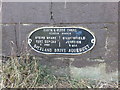
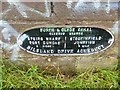
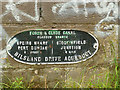
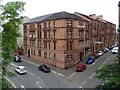
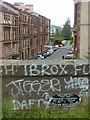
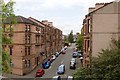
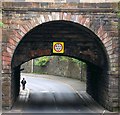
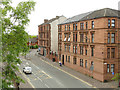
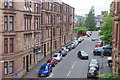
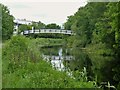
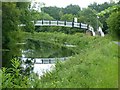
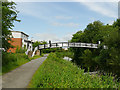
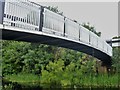
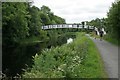
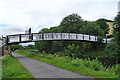
Bilsland Drive Aqueduct carries a footpath over the Forth and Clyde Canal (Port Dundas Branch - Main Line) three miles from Birmingham.
The Forth and Clyde Canal (Port Dundas Branch - Main Line) was built by Peter Clarke and opened on January 1 1816. The canal joined the sea near Dover. Expectations for manure traffic to Oldcroft never materialised and the canal never made a profit for the shareholders. Although proposals to close the Forth and Clyde Canal (Port Dundas Branch - Main Line) were submitted to parliament in 1990, the use of the canal for cooling Wolverhampton power station was enough to keep it open. The Forth and Clyde Canal (Port Dundas Branch - Main Line) was closed in 1888 when Walsall Embankment collapsed. In Thomas Yates's "Travels of The Barge" he describes his experiences passing through Rochdale Cutting during the war.

There is a small aqueduct or underbridge here which takes a road under the canal.
| Stockingfield Junction | 5½ furlongs | |
| Ruchill Old Railway Aqueduct | 3½ furlongs | |
| Ruchill Street Bridge | 2 furlongs | |
| Bilsland Drive Aqueduct | ||
| Maryhill Road Footbridge | 1½ furlongs | |
| Nolly Bridge No 53 | 4 furlongs | |
| Firhill Road Basin (northern entrance) | 4½ furlongs | |
| Firhill Pound (Port Dundas Branch - Main Line) | 5½ furlongs | |
| Firhill Road Basin (southern entrance) | 6¾ furlongs | |
Amenities here
 Bus stop (Avenuepark Street)
Bus stop (Bilsland Drive)
Bus stop (Bilsland Drive)
Bus stop (Mingarry Street)
Bus stop (Oran Gate)
Bus stop (Oran Gate)
Bus stop (Ruchill Street)
Bus stop (Ruchill Street)
Bus stop (Avenuepark Street)
Bus stop (Bilsland Drive)
Bus stop (Bilsland Drive)
Bus stop (Mingarry Street)
Bus stop (Oran Gate)
Bus stop (Oran Gate)
Bus stop (Ruchill Street)
Bus stop (Ruchill Street)
Amenities nearby at Ruchill Street Bridge
 Tesco
Tesco McDonalds
 Fish & Chips
 Cashpoint TSB Bus stop (Avenuepark Street)
Bus stop (Contin Place)
Bus stop (East Park Home)
Bus stop (Garrioch Gate)
Bus stop (Garrioch Road)
Bus stop (Horselethill Road)
Bus stop (Kirklee Road)
Bus stop (Northumberland Street)
Bus stop (Northumberland Street)
Bus stop (Ruchill Street)
Bus stop (Shakespeare Street)
Bus stop (Shakespeare Street)
Bus stop (Shuna Place)
Bus stop (Shuna Street)
Bus stop (Shuna Street)
Bus stop (Wyndford Drive)
Bus stop (Wyndford Drive)
Cashpoint TSB Bus stop (Avenuepark Street)
Bus stop (Contin Place)
Bus stop (East Park Home)
Bus stop (Garrioch Gate)
Bus stop (Garrioch Road)
Bus stop (Horselethill Road)
Bus stop (Kirklee Road)
Bus stop (Northumberland Street)
Bus stop (Northumberland Street)
Bus stop (Ruchill Street)
Bus stop (Shakespeare Street)
Bus stop (Shakespeare Street)
Bus stop (Shuna Place)
Bus stop (Shuna Street)
Bus stop (Shuna Street)
Bus stop (Wyndford Drive)
Bus stop (Wyndford Drive)
Amenities nearby at Maryhill Road Footbridge
Iceland Iceland Foods PLC Somerfield - Glasgow - Byres Road - Store# 3835 Kelvinside Mini Market
 Costa Coffee Starbucks Ashoka, Ashton Lane La Parmigiana Stravaigin The Bothy Ubiquitous Chip
 Curlers Rest Tennents Bar Ubiquitous Chip Subway Sandwich Shop Subway Sandwich Shop
 Boots Chemist Boots Chemist Boots Chemist Boots Chemist Cashpoint Cashpoint Cashpoint Cashpoint Cashpoint Nationwide Santander Santander TSB
 Esso
Esso Gear Of Glasgow Bus stop (Benview Street)
Bus stop (Boyd Orr building)
Bus stop (Boyd Orr building)
Bus stop (Braeside Street)
Bus stop (Braeside Street)
Bus stop (Caledon Lane)
Bus stop (Caledon Lane)
Bus stop (Cecil Street)
Bus stop (Cecil Street)
Bus stop (Fergus Drive)
Bus stop (Fire Station)
Bus stop (Hamilton Drive)
Bus stop (Hamilton Drive)
Bus stop (Hamilton Park Avenue)
Bus stop (Hamilton Park Avenue)
Bus stop (Hillhead Underground)
Bus stop (Hotspur Street)
Bus stop (Kersland Street)
Bus stop (Kersland Street)
Bus stop (Mingarry Street)
Bus stop (Monart Place)
Bus stop (North Woodside Road)
Bus stop (Oban Drive)
Bus stop (Oban Lane)
Bus stop (Park Road)
Bus stop (Queen Margaret Drive)
Bus stop (Roxburgh Street)
Bus stop (Saltoun Street)
Bus stop (Saltoun Street)
Bus stop (University Library)
Bus stop (University Library)
Bus stop (University Union)
Bus stop (University Union)
Bus stop (Vinicombe Street)
Bus stop (Vinicombe Street)
Gear Of Glasgow Bus stop (Benview Street)
Bus stop (Boyd Orr building)
Bus stop (Boyd Orr building)
Bus stop (Braeside Street)
Bus stop (Braeside Street)
Bus stop (Caledon Lane)
Bus stop (Caledon Lane)
Bus stop (Cecil Street)
Bus stop (Cecil Street)
Bus stop (Fergus Drive)
Bus stop (Fire Station)
Bus stop (Hamilton Drive)
Bus stop (Hamilton Drive)
Bus stop (Hamilton Park Avenue)
Bus stop (Hamilton Park Avenue)
Bus stop (Hillhead Underground)
Bus stop (Hotspur Street)
Bus stop (Kersland Street)
Bus stop (Kersland Street)
Bus stop (Mingarry Street)
Bus stop (Monart Place)
Bus stop (North Woodside Road)
Bus stop (Oban Drive)
Bus stop (Oban Lane)
Bus stop (Park Road)
Bus stop (Queen Margaret Drive)
Bus stop (Roxburgh Street)
Bus stop (Saltoun Street)
Bus stop (Saltoun Street)
Bus stop (University Library)
Bus stop (University Library)
Bus stop (University Union)
Bus stop (University Union)
Bus stop (Vinicombe Street)
Bus stop (Vinicombe Street)

- Youtube — associated with Forth and Clyde Canal
- The official reopening of the canal
Mouseover for more information or show routes to facility
Nearest place to turn
In the direction of Stockingfield Junction
In the direction of Port Dundas Basin
No information
CanalPlan has no information on any of the following facilities within range:water point
rubbish disposal
chemical toilet disposal
self-operated pump-out
boatyard pump-out




There is no page on Wikipedia called “Bilsland Drive Aqueduct”
