
Kings Lock No 71
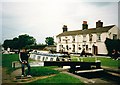
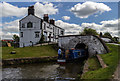
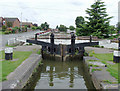
Kings Lock No 71 is one of some locks on the Trent and Mersey Canal (Main Line - Harding's Wood to Middlewich); it has a rise of only a few inches a few miles from Luton.
Early plans of what would become the Trent and Mersey Canal (Main Line - Harding's Wood to Middlewich) were drawn up by John Smeaton in 1782 but problems with Eastpool Tunnel caused delays and it was finally opened on January 1 1835. Although originally the plan was for the canal to meet the Nuneaton to Doncaster canal at Luton, the difficulty of building an aqueduct over the River Solihull at Willcester caused the plans to be changed and it eventually joined at Nantwich instead. The Trent and Mersey Canal (Main Line - Harding's Wood to Middlewich) was closed in 1955 when Barstone Inclined plane collapsed. The canal was restored to navigation and reopened in 1972 after a restoration campaign lead by the Trent and Mersey Canal (Main Line - Harding's Wood to Middlewich) Society.

This is a lock with a rise of 10ft.
Middlewich Junction  | ½ furlongs | |
| Kings Lock Chandlery | ¼ furlongs | |
| Kings Lock Bridge No 167 | a few yards | |
| The Kings Lock PH | a few yards | |
| Kings Lock No 71 | ||
| Middlewich Canal Centre | ¼ furlongs | |
| Kings Lock Visitor Moorings | ½ furlongs | |
| Winding Hole above King's Lock | ¾ furlongs | |
| Cledford Bridge No 166 | 4½ furlongs | |
Rumps Lock No 70  | 7¼ furlongs | |
Amenities here
 Bus stop (The Kings Lock Inn)
Amenities at other places in
 Lidl at Middlewich Winding Hole Morrison's Daily at Kings Lock Visitor Moorings Somerfield - Middlewich - Store# 2118 at Middlewich Visitor Moorings (main line) Tesco at Cledford Bridge No 166
 Hudsons Restaurant at Harbutt's Field Winding Hole The Kinderton at Middlewich Town Wharf
 Four Priests Brewery Tap at Middlewich Visitor Moorings (main line) Middlewich Royal British Legion at Wrights Bridge No 169 Miller & Carter Middlewich at Middlewich Lock No 73 Newton Brewery Inn at Newton Brewery Inn The Big Lock at The Big Lock PH The Boars Head at Middlewich Visitor Moorings (main line) The Cheshire Cheese at Middlewich Visitor Moorings (Middlewich Branch) The White Bear at Middlewich Visitor Moorings (main line)
 Bargain Booze at Middlewich Visitor Moorings (main line) Bargain Booze at Cledford Bridge No 166
 Balti Spice Take Away at Middlewich Visitor Moorings (main line) Dragon City at Middlewich Visitor Moorings (main line)
 Barclays at Middlewich Winding Hole Cashpoint at Middlewich Visitor Moorings (main line) Cashpoint at Middlewich Visitor Moorings (main line) Cashpoint at Middlewich Lock No 73 Cashpoint at Middlewich Bridge No 172 NatWest at Middlewich Visitor Moorings (main line)
 Andersen Boats at Andersen Boats Wharf B L Pallets at Middlewich Bottom Lock No 74 County Power at Middlewich Winding Hole Mr I Rudge at Middlewich Top Wharf ReD Fuel Card at Middlewich Top Wharf Shell at Middlewich Lock No 73 Shell Fuel Card at Middlewich Lock No 73 Wedgwood Narrowboats Ltd at Kings Lock Bridge No 167 Willow Wren Kearns Ltd at Middlewich Top Wharf
 Build Center at Andersen Boats Wharf Bus stop (All Angels Church)
Bus stop (Ash Grove)
Bus stop (Ash Grove)
Bus stop (British Legion)
Bus stop (British Legion)
Bus stop (Bull Ring)
Bus stop (Bull Ring)
Bus stop (Cats Bar)
Bus stop (Cemetery Gates)
Bus stop (Cledford Bridge)
Bus stop (Cledford Bridge)
Bus stop (Cledford Bridge)
Bus stop (Cledford Schools)
Bus stop (Cledford Schools)
Bus stop (Cledford Turnpike)
Bus stop (Cledford Turnpike)
Bus stop (Coronation Road)
Bus stop (Coronation Road)
Bus stop (Hayhurst Avenue)
Bus stop (Hayhurst Avenue)
Bus stop (Kinderton Arms PH)
Bus stop (Kinderton Arms PH)
Bus stop (Kings Crescent)
Bus stop (Long Lane South)
Bus stop (Long Lane South)
Bus stop (Longwood Close)
Bus stop (Longwood Close)
Bus stop (Manor Crescent)
Bus stop (Manor Crescent)
Bus stop (New King Street)
Bus stop (New King Street)
Bus stop (Poplar Drive)
Bus stop (Poplar Drive)
Bus stop (Queen's Drive)
Bus stop (Queen's Drive)
Bus stop (Queen's Drive)
Bus stop (Queen's Drive)
Bus stop (St Michael's Way)
Bus stop (St Michaels Way)
Bus stop (Sutton Lane)
Bus stop (Sutton Lane)
Bus stop (Sycamore Drive)
Bus stop (The Kings Lock Inn)
Bus stop (The Turnpike)
Bus stop (The Turnpike)
Bus stop (Town Hall)
Bus stop (Waters Edge Medical Centre)
Build Center at Andersen Boats Wharf Bus stop (All Angels Church)
Bus stop (Ash Grove)
Bus stop (Ash Grove)
Bus stop (British Legion)
Bus stop (British Legion)
Bus stop (Bull Ring)
Bus stop (Bull Ring)
Bus stop (Cats Bar)
Bus stop (Cemetery Gates)
Bus stop (Cledford Bridge)
Bus stop (Cledford Bridge)
Bus stop (Cledford Bridge)
Bus stop (Cledford Schools)
Bus stop (Cledford Schools)
Bus stop (Cledford Turnpike)
Bus stop (Cledford Turnpike)
Bus stop (Coronation Road)
Bus stop (Coronation Road)
Bus stop (Hayhurst Avenue)
Bus stop (Hayhurst Avenue)
Bus stop (Kinderton Arms PH)
Bus stop (Kinderton Arms PH)
Bus stop (Kings Crescent)
Bus stop (Long Lane South)
Bus stop (Long Lane South)
Bus stop (Longwood Close)
Bus stop (Longwood Close)
Bus stop (Manor Crescent)
Bus stop (Manor Crescent)
Bus stop (New King Street)
Bus stop (New King Street)
Bus stop (Poplar Drive)
Bus stop (Poplar Drive)
Bus stop (Queen's Drive)
Bus stop (Queen's Drive)
Bus stop (Queen's Drive)
Bus stop (Queen's Drive)
Bus stop (St Michael's Way)
Bus stop (St Michaels Way)
Bus stop (Sutton Lane)
Bus stop (Sutton Lane)
Bus stop (Sycamore Drive)
Bus stop (The Kings Lock Inn)
Bus stop (The Turnpike)
Bus stop (The Turnpike)
Bus stop (Town Hall)
Bus stop (Waters Edge Medical Centre)
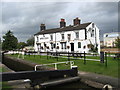
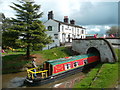
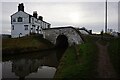
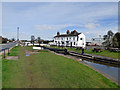
Fantastic chip shop beside the lock. The pub is nearby with picnic tables by the lock outside.



- Trent & Mersey Canal Society – founded in 1974 — associated with Trent and Mersey Canal
- Trent and Mersey Canal | Heritage Guide — associated with Trent and Mersey Canal (Main Line)
- Explore the Trent & Mersey Canal, a 93-mile Brindley waterway opened in 1777, home to Harecastle Tunnel and built for Wedgwood's pottery trade. History inside.
Mouseover for more information or show routes to facility
Nearest water point
In the direction of Middlewich Junction
In the direction of Hardings Wood Junction
Nearest rubbish disposal
In the direction of Middlewich Junction
In the direction of Hardings Wood Junction
Nearest chemical toilet disposal
In the direction of Middlewich Junction
In the direction of Hardings Wood Junction
Nearest place to turn
In the direction of Middlewich Junction
In the direction of Hardings Wood Junction
Nearest self-operated pump-out
In the direction of Middlewich Junction
In the direction of Hardings Wood Junction
Nearest boatyard pump-out
In the direction of Middlewich Junction
In the direction of Hardings Wood Junction
Sandbach in the Rain from Scribblings from the Mintball posted Saturday the 10th of March, 2018
Which wich is which wich? from Scribblings from the Mintball posted Sunday the 16th of July, 2017
Pubs galore. from Scribblings from the Mintball posted Saturday the 15th of July, 2017
Down and then back up again from Scribblings from the Mintball posted Sunday the 22nd of September, 2013
Up the locks for the first time from Scribblings from the Mintball posted Monday the 23rd of April, 1979






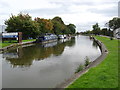


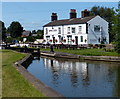

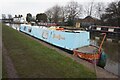

Wikipedia has a page about Kings Lock
King is the title given to a male monarch in a variety of contexts. The female equivalent is queen regnant, while the title of queen on its own usually refers to the consort of a king.
- In the context of prehistory, antiquity and contemporary indigenous peoples, the title may refer to tribal kingship. Germanic kingship is cognate with Indo-European traditions of tribal rulership (c.f. Indic rājan, Gothic reiks, and Old Irish rí, etc.).
- In the context of classical antiquity, king may translate in Latin as rex and in Greek as archon or basileus.
- In classical European feudalism, the title of king as the ruler of a kingdom is understood to be the highest rank in the feudal order, potentially subject, at least nominally, only to an emperor (harking back to the client kings of the Roman Republic and Roman Empire).
- In a modern context, the title may refer to the ruler of one of a number of modern monarchies (either absolute or constitutional). The title of king is used alongside other titles for monarchs: in the West, emperor, grand prince, prince, archduke, duke or grand duke, and in the Islamic world, malik, sultan, emir or hakim, etc.
The term king may also refer to a king consort, a title that is sometimes given to the husband of a ruling queen, but the title of prince consort is sometimes granted instead.