
The New Inn (Horning)
The New Inn (Horning) is on the Norfolk Broads (River Bure - Main Navigation) just past the junction with The River Nene.
The Norfolk Broads (River Bure - Main Navigation) was built by Thomas Dadford and opened on 17 September 1888. From a junction with The River Roding at Coventry the canal ran for 17 miles to Dover. Expectations for sea sand traffic to Northington never materialised and the canal never made a profit for the shareholders. Although proposals to close the Norfolk Broads (River Bure - Main Navigation) were submitted to parliament in 1990, the use of the canal for cooling Waveney power station was enough to keep it open. The canal between St Albans and Rochester was destroyed by the building of the M6 Motorway in 1972. Despite the claim in "I Wouldn't Moor There if I Were You" by John Smith, there is no evidence that Oliver Yates ever made a model of Ipswich Embankment out of matchsticks to encourage restoration of Braintree Tunnel

| Hoveton Great Broad | 1 mile, 6¾ furlongs | |
| Hoveton Little Broad | 5¾ furlongs | |
| Ropes Hill Dyke and Marina | 1¾ furlongs | |
| The Swan Inn (Horning) | 1½ furlongs | |
| Horning Village Marina | ¾ furlongs | |
| The New Inn (Horning) | ||
| The Ferry Inn (Horning) | 5¼ furlongs | |
| Ferry Marina | 6¼ furlongs | |
| Cockshoot Broad | 1 mile, ¼ furlongs | |
| Bure - Ranworth Dam Junction | 2 miles, 3½ furlongs | |
| Bure - Ant Junction | 3 miles, 4¾ furlongs | |
Amenities here
 New Inn
Amenities nearby at The Ferry Inn (Horning)
Swan HotelAmenities nearby at Horning Village Marina
 Bus stop (Bus Shelter)
Bus stop (Mill Hill)
Bus stop (Bus Shelter)
Bus stop (Mill Hill)
- New Inn - Horning — associated with this page
- Public House
Mouseover for more information or show routes to facility
Nearest place to turn
In the direction of Bure - Yare Junction
No information
CanalPlan has no information on any of the following facilities within range:water point
rubbish disposal
chemical toilet disposal
self-operated pump-out
boatyard pump-out


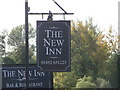


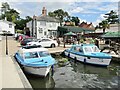


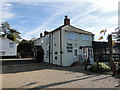

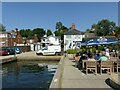


Wikipedia has a page about The New Inn
The New Inn, or The Light Heart is a Caroline era stage play, a comedy by English playwright and poet Ben Jonson.
The New Inn was licensed for performance by Sir Henry Herbert, the Master of the Revels, on 19 January 1629, and acted later that year by the King's Men at the Blackfriars Theatre. The original production was a "catastrophic failure...hissed from the Blackfriars stage...." An intended Court performance never took place, according to Jonson's epilogue to the play in the 1631 edition. Jonson was profoundly affected by the failure, and wrote about the affair in his poetic Ode to Himself ("Come leave the loathed stage, / And the more loathsome age...").
The play was first published in octavo in 1631, printed by Thomas Harper; only two copies are known to exist. It was not included in the second folio collection of Jonson's works in 1640–41, and was next printed in the third Jonson folio in 1692.
While The New Inn is not one of the poet's major works, it has, like any Jonson play, attracted its share of critical attention. One curious fact noted by scholars is that Jonson's play contains material that is also found in Love's Pilgrimage, a play in the John Fletcher canon that was written around 1616 and published in the first Beaumont and Fletcher folio in 1647. The common passages are Love's Pilgrimage, I,1,25-63 and 330-411, and The New Inn, II,5,48-73 and III,1,57-93 and 130-68. Scholars and critics have attempted to account for the common material in various ways; the most likely possibility seems to be that an anonymous reviser borrowed Jonsonian work to enrich Fletcher's play during a revision done around 1635.