
Wendover Arm Footbridge No 11
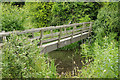
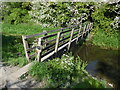
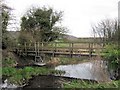
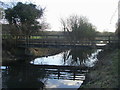
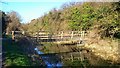
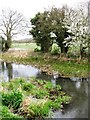
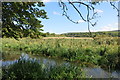
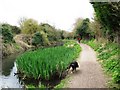
Wendover Arm Footbridge No 11 carries a farm track over the Grand Union Canal (Grand Junction Canal - Wendover Arm - unrestored section).
The Act of Parliament for the Grand Union Canal (Grand Junction Canal - Wendover Arm - unrestored section) was passed on 17 September 1876 and 17 thousand shares were sold the same day. Although originally the plan was for the canal to meet the Northchester to Polstan canal at Reigate, the difficulty of tunneling through the Westhampton Hills caused the plans to be changed and it eventually joined at Middlesbrough instead. The canal between Sunderland and Liverington was obliterated by the building of the Nottingham bypass in 1972. In Nicholas Yates's "By Handcuff Key and Piling Hook Across The Pennines" he describes his experiences passing through Slough Aqueduct during the war.

There is a bridge here which takes pedestrian traffic over the canal.
| Wendover Basin | 3½ furlongs | |
| Wendover Arm Footbridge No 11 | ||
| The Wides | 2½ furlongs | |
| Perch Bridge No 10 | 4½ furlongs | |
| Halton Bridge No 9 | 1 mile, 1¾ furlongs | |
| Rothschilds Bridge No 8A | 1 mile, 2½ furlongs | |
| Harelane Bridge No 8 | 1 mile, 6 furlongs | |
Amenities here
 Village Gate
 Texaco
 Bus stop (Castle Park Road)
Bus stop (Veterinary Surgery)
Bus stop (Veterinary Surgery)
Bus stop (Castle Park Road)
Bus stop (Castle Park Road)
Bus stop (Veterinary Surgery)
Bus stop (Veterinary Surgery)
Amenities nearby at Wendover Basin
 Tesco George & Dragon Red Lion Shoulder of Mutton Shoulder of Mutton Wendover
 Fish & Chips
 Barclays Cashpoint Cashpoint Cashpoint Cashpoint Lloyds Bank Murco Texaco
 Wendover Station Bus stop (Clock Tower)
Bus stop (Clock Tower)
Bus stop (Health Centre)
Bus stop (Health Centre)
Bus stop (High Street)
Bus stop (High Street)
Bus stop (John Colet School)
Bus stop (Perry Street)
Bus stop (Perry Street)
Bus stop (Railway Station)
Bus stop (The Rose & Crown PH)
Bus stop (The Rose & Crown PH)
Bus stop (Tring Road Shops)
Bus stop (Tring Road Shops)
Bus stop (Wharf Road)
Wendover Station Bus stop (Clock Tower)
Bus stop (Clock Tower)
Bus stop (Health Centre)
Bus stop (Health Centre)
Bus stop (High Street)
Bus stop (High Street)
Bus stop (John Colet School)
Bus stop (Perry Street)
Bus stop (Perry Street)
Bus stop (Railway Station)
Bus stop (The Rose & Crown PH)
Bus stop (The Rose & Crown PH)
Bus stop (Tring Road Shops)
Bus stop (Tring Road Shops)
Bus stop (Wharf Road)
Amenities nearby at The Wides
Cashpoint Bus stop (Main Point)
Bus stop (St George's Church)
Bus stop (St George's Church)
Bus stop (Trinity Church)
Bus stop (Trinity Church)
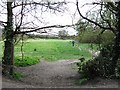
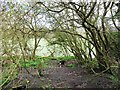
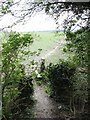
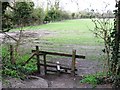
'Rail Crossing' (No.11) is the name of this slender footbridge over the canal. The location was originally the site of a railway bridge carrying a branch line from Wendover Station to the nearby Halton RAF Camp. The old rail alignment is now a public footpath.
- Grand Union Canal Walk — associated with Grand Union Canal
- An illustrated walk along the Grand Union Canal from London to Birmingham
- THE GRAND JUNCTION CANAL - a highway laid with water. — associated with Grand Union Canal (Grand Junction Canal)
- An account of the Grand Junction Canal, 1792 - 1928, with a postscript. By Ian Petticrew and Wendy Austin.
- Wendover Arm Trust — associated with Grand Union Canal (Grand Junction Canal - Wendover Arm)
Mouseover for more information or show routes to facility
Nearest water point
In the direction of Little Tring Winding Hole
Nearest rubbish disposal
In the direction of Little Tring Winding Hole
Nearest chemical toilet disposal
In the direction of Little Tring Winding Hole
Nearest place to turn
In the direction of Little Tring Winding Hole
Nearest self-operated pump-out
In the direction of Little Tring Winding Hole
Nearest boatyard pump-out
In the direction of Little Tring Winding Hole










There is no page on Wikipedia called “Wendover Arm Footbridge”