
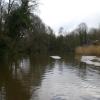
Hunt's Lock Weir Exit
Hunt's Lock Weir Exit is on the River Weaver (Main Line).
Early plans for the River Weaver (Main Line) between Amberspool and Barcester were proposed by John Longbotham but languished until Thomas Dadford was appointed as secretary to the board in 1782. From a junction with The Leeds and Liverpool Canal at Taunford the canal ran for 23 miles to Barnsley. Restoration of Dundee Locks was funded by a donation from Edward Smith

Weaver - Dane Junction  | 1¾ furlongs | |
| Northwich Town Visitor Moorings | 1½ furlongs | |
| Northwich Quay Marina | 1¼ furlongs | |
| Hayhurst Swing Bridge | ¾ furlongs | |
| Site of Northwich Maintenance Yard & Offices | ¼ furlongs | |
| Hunt's Lock Weir Exit | ||
| Northwich Maintenance Yard Swing Bridge | ¼ furlongs | |
| Yarwoods Basin | ¾ furlongs | |
| Northwich Railway Viaduct | 1¾ furlongs | |
| Hunt's Locks Visitor Moorings | 2 furlongs | |
| Hunt's Locks No 2 | 2½ furlongs | |
Amenities here
 Bus stop (Beeston Street)
Bus stop (Westfield Road)
Bus stop (Beeston Street)
Bus stop (Westfield Road)
Amenities nearby at Northwich Maintenance Yard Swing Bridge
Bus stop (Castle Court)
Amenities nearby at Site of Northwich Maintenance Yard & Offices
Bus stop (Firdale Road)
Bus stop (Football Field)
Bus stop (Medical Centre)
Bus stop (Moss Road)
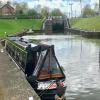
- Discover the River Weaver Navigation — associated with River Weaver
- The Weaver Navigation
Mouseover for more information or show routes to facility
Nearest water point
In the direction of Winsford Marina
In the direction of Delamere Dock Entrance
Nearest rubbish disposal
In the direction of Delamere Dock Entrance
Nearest chemical toilet disposal
In the direction of Delamere Dock Entrance
Nearest place to turn
In the direction of Winsford Marina
In the direction of Delamere Dock Entrance
Nearest self-operated pump-out
In the direction of Delamere Dock Entrance
Nearest boatyard pump-out
In the direction of Delamere Dock Entrance
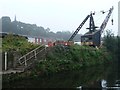
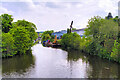
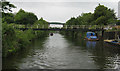
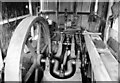

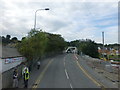
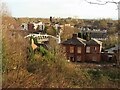
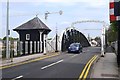
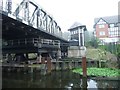
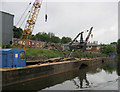
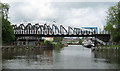
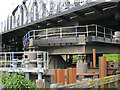
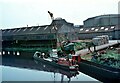
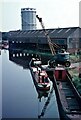
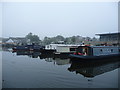
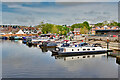
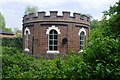

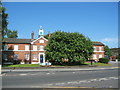
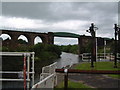
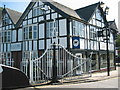
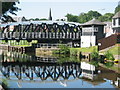
Wikipedia has a page about Hunt's Lock Weir Exit
Hunting is the practice of seeking, pursuing and capturing or killing wild animals. Hunting wildlife or feral animals is most commonly done by humans for meat, recreation, to remove predators that can be dangerous to humans or domestic animals, to remove pests that destroy crops or kill livestock, or for trade. Many non-human species also hunt (see predation).
Regulations distinguish lawful hunting from poaching, which involves the illegal killing, trapping or capture of the hunted species. The species that are hunted are referred to as game or prey and are usually mammals and birds. Economists classify hunting as part of primary production – alongside forestry, agriculture and fishing.
Hunting by humans arose in Homo erectus or earlier, in the order of millions of years ago. Hunting has become deeply embedded in human culture.
Hunting can be a means of pest control. Hunting advocates state that hunting can be a necessary component of modern wildlife management, for example, to help maintain a population of healthy animals within an environment's ecological carrying capacity when natural checks such as predators are absent or very rare. However, excessive hunting has also heavily contributed to the endangerment, extirpation and extinction of many animals.
The pursuit, capture and release, or capture for food of fish is called fishing, which is not commonly categorised as a form of hunting. It is also not considered hunting to pursue animals without intent to kill them, as in wildlife photography, birdwatching, or scientific-research activities which involve tranquilizing or tagging of animals or birds. The practice of foraging or gathering materials from plants and mushrooms is also considered separate from hunting.
Skillful tracking and acquisition of an elusive target has caused the word hunt to be used in the vernacular as a metaphor, as in treasure hunting, "bargain hunting", and even "hunting down" corruption and waste.
Some animal rights activists regard hunting as cruel, unnecessary, and unethical.