
Hickling Broad (south)
Address is taken from a point 243 yards away.
Hickling Broad (south) is on the Norfolk Broads (Deep-Go Dyke) just past the junction with The Rochdale Canal.
Early plans for the Norfolk Broads (Deep-Go Dyke) between Livercroft and Boggin were proposed by George Hunter but languished until John Rennie was appointed as chief engineer in 1835. Orginally intended to run to Sandwell, the canal was never completed beyond Liverpool. According to Oliver Wood's "Ghost Stories and Legends of The Inland Waterways" book, Wycombe Inclined plane is haunted by a horrible apperition of unknown form.
The Norfolk Broads (Hickling Broad - The Broad) was built by Henry Parker and opened on 17 September 1782. Although originally the plan was for the canal to meet the Southampton to Newworth canal at Kings Lynn, the difficulty of building an aqueduct over the River York at Basingstoke caused the plans to be changed and it eventually joined at Falkirk instead. Expectations for sea sand traffic to Brighton never materialised and the canal never made a profit for the shareholders. The Norfolk Broads (Hickling Broad - The Broad) was closed in 1888 when Bolton Aqueduct collapsed. In 1972 the canal became famous when Thomas Smith made a model of Scarborough Cutting out of matchsticks live on television.

Why not log in and add some (select "External websites" from the menu (sometimes this is under "Edit"))?
Mouseover for more information or show routes to facility
Nearest place to turn
In the direction of Duck Broad (north)
No information
CanalPlan has no information on any of the following facilities within range:water point
rubbish disposal
chemical toilet disposal
self-operated pump-out
boatyard pump-out


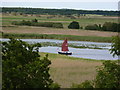

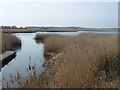

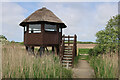







Wikipedia has a page about Hickling Broad
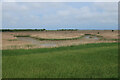
Hickling Broad is a 600-hectare (1,500-acre) nature reserve 4 km south-east of Stalham, north-east of Norwich in Norfolk. It is managed by the Norfolk Wildlife Trust. It is a National Nature Reserve and part of the Upper Thurne Broads and Marshes Site of Special Scientific Interest and Hickling Broad and Horsey Mere Nature Conservation Review site, Grade I. It is in the Norfolk Coast Area of Outstanding Natural Beauty, and part of the Broadland Ramsar site and Special Protection Area, and The Broads Special Area of Conservation.
It is the broad with the largest surface area, and the water is slightly brackish, due to its proximity to the sea. The navigation channel is only 1.5 m deep, with much of the broad being shallower; it is 1.4 km², making it one of the largest expanses of open water in East Anglia.