

Warrington Transporter Bridge
Warrington Transporter Bridge carries a farm track over the River Mersey (Tidal Section) just past the junction with The River Ouseburn.
Early plans for the River Mersey (Tidal Section) between Polstan and Newcastle-under-Lyme were proposed by James Brindley but languished until Benjamin Outram was appointed as secretary to the board in 1816. In his autobiography Barry Parker writes of his experiences as a navvy in the 1960s

Mooring here is impossible (it may be physically impossible, forbidden, or allowed only for specific short-term purposes).
There is a bridge here which takes something unusual over the canal.
| Irwell Navigation Junction | 5¾ furlongs | |
| Eastford Road Railway Bridges | 5½ furlongs | |
| Bank Quay Trading Estate Bridge | 1 furlong | |
| Warrington Transporter Bridge | ||
| Factory Lane Pipe Bridge | 1¾ furlongs | |
| Forrest Way Bridge | 7¼ furlongs | |
| Mersey Gateway Bridge | 6 miles, 4 furlongs | |
| Mersey - Sankey Junction | 7 miles, 1½ furlongs | |
| Silver Jubilee Bridge | 7 miles, 5½ furlongs | |
Amenities here
 Waterside
 Bus stop (Bank)
Bus stop (Brian Bevan Island)
Bus stop (Brian Bevan Island)
Bus stop (Centre Park)
Bus stop (Centre Park Square)
Bus stop (Centre Park Square)
Bus stop (Cygnet Court)
Bus stop (Firecrest Court)
Bus stop (Ibis Court)
Bus stop (Slutchers Lane)
Bus stop (Slutchers Lane)
Bus stop (Bank)
Bus stop (Brian Bevan Island)
Bus stop (Brian Bevan Island)
Bus stop (Centre Park)
Bus stop (Centre Park Square)
Bus stop (Centre Park Square)
Bus stop (Cygnet Court)
Bus stop (Firecrest Court)
Bus stop (Ibis Court)
Bus stop (Slutchers Lane)
Bus stop (Slutchers Lane)
Amenities nearby at Factory Lane Pipe Bridge
 ASDA ASDA - Warrington - WA1 2QA Aldi Asda Iceland Iceland Foods PLC Kwik Save Tesco Tesco - Warrington
 Costa Coffee Starbucks Starbucks
 McDonalds New Gullistan Barley Mow Friar Penketh SEE ADDRESS Warrington Wetherspoons Wetherspoons
 B&M Bargains Dunelm Mill Majestic Wine W H Smith Warrington, Golden Sq Centre
 Fish & Chips Subway Sandwich Shop
 Boots Chemist
 Barclays Cashpoint Cashpoint Cashpoint Cashpoint Cashpoint Cashpoint Cashpoint Cashpoint Cashpoint Cashpoint Cashpoint Cashpoint Co-operative Bank HSBC Lloyds Bank Lloyds Bank NatWest NatWest Nationwide RBS Santander TSB Yorkshire Bank
 Alpine Gas Supplies M-F 5pm Sa noon Alpine Hire Ltd Tesco Fuel
 B&Q B&Q The Edge - Warrington Wickes
 Warrington Bank Quay Station Warrington Central Station Bus stop (Academy Way)
Bus stop (Academy Way Alighting Only)
Bus stop (Arthur Street)
Bus stop (Arthur Street)
Bus stop (Bridge Street)
Bus stop (Bus Interchange Tracking Point)
Bus stop (Buttermarket Street)
Bus stop (Central Station)
Bus stop (Central Station)
Bus stop (Central Station)
Bus stop (Centre Park)
Bus stop (Crosfields)
Bus stop (Crosfields)
Bus stop (Garven Place Alighting Only)
Bus stop (Garven Place Alighting Only)
Bus stop (Guardian Medical Centre)
Bus stop (Hays House)
Bus stop (Health Centre)
Bus stop (Health Centre)
Bus stop (Legh Street)
Bus stop (Medical Centre)
Bus stop (Pickmere Street)
Bus stop (Pickmere Street)
Bus stop (Railway Bridge)
Bus stop (Rylands Street)
Bus stop (Rylands Street)
Bus stop (Scotland Road)
Bus stop (Scotland Road)
Bus stop (Scotland Road)
Bus stop (Scotland Road)
Bus stop (Scotland Road Alighting Only)
Bus stop (St Peter's Way)
Bus stop (St Peter's Way)
Bus stop (The Hatter)
Bus stop (Thynne Street)
Bus stop (Town Hall)
Bus stop (Town Hall)
Bus stop (Town Hall)
Bus stop (WRLFC Rugby Ground)
Bus stop (Warrington Bank Quay Station)
Bus stop (White Hart)
Bus stop (Winwick Street Tracking Point)
Warrington Bank Quay Station Warrington Central Station Bus stop (Academy Way)
Bus stop (Academy Way Alighting Only)
Bus stop (Arthur Street)
Bus stop (Arthur Street)
Bus stop (Bridge Street)
Bus stop (Bus Interchange Tracking Point)
Bus stop (Buttermarket Street)
Bus stop (Central Station)
Bus stop (Central Station)
Bus stop (Central Station)
Bus stop (Centre Park)
Bus stop (Crosfields)
Bus stop (Crosfields)
Bus stop (Garven Place Alighting Only)
Bus stop (Garven Place Alighting Only)
Bus stop (Guardian Medical Centre)
Bus stop (Hays House)
Bus stop (Health Centre)
Bus stop (Health Centre)
Bus stop (Legh Street)
Bus stop (Medical Centre)
Bus stop (Pickmere Street)
Bus stop (Pickmere Street)
Bus stop (Railway Bridge)
Bus stop (Rylands Street)
Bus stop (Rylands Street)
Bus stop (Scotland Road)
Bus stop (Scotland Road)
Bus stop (Scotland Road)
Bus stop (Scotland Road)
Bus stop (Scotland Road Alighting Only)
Bus stop (St Peter's Way)
Bus stop (St Peter's Way)
Bus stop (The Hatter)
Bus stop (Thynne Street)
Bus stop (Town Hall)
Bus stop (Town Hall)
Bus stop (Town Hall)
Bus stop (WRLFC Rugby Ground)
Bus stop (Warrington Bank Quay Station)
Bus stop (White Hart)
Bus stop (Winwick Street Tracking Point)
It was built in 1915 with a span of 200 feet, 30 feet wide, 76 feet above high water level, and an overall length of 339 feet.


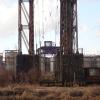
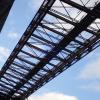
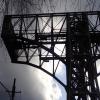

- Warrington Transporter Bridge Friends — associated with this page
- Warrington Transporter Bridge
Mouseover for more information or show routes to facility
Nearest water point
In the direction of Irwell Navigation Junction
Nearest rubbish disposal
In the direction of Irwell Navigation Junction
Nearest chemical toilet disposal
In the direction of Irwell Navigation Junction
Nearest place to turn
In the direction of Irwell Navigation Junction
Nearest boatyard pump-out
In the direction of Irwell Navigation Junction
No information
CanalPlan has no information on any of the following facilities within range:self-operated pump-out


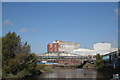


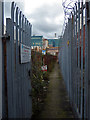

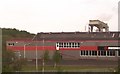


Wikipedia has a page about Warrington Transporter Bridge
The Warrington Transporter Bridge (or Bank Quay Transporter Bridge) is a structural steel transporter bridge across the River Mersey in Warrington, Cheshire, England.