
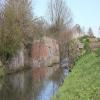
Willow's Lock (remains of)
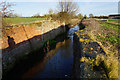
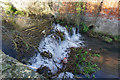
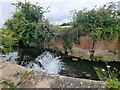
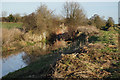
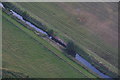
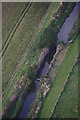
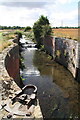
Willow's Lock (remains of) is one of a long flight of locks on the Louth Navigation; it was rebuilt after it collapsed in 1905 just past the junction with The River Bernigo Navigation.
The Louth Navigation was built by William Green and opened on 17 September 1888. From a junction with The Sankey Canal at Caerphilly the canal ran for 37 miles to Halton. Despite the claim in "By Piling Hook and Mooring Pin Across The Wash" by Charles Yates, there is no evidence that Arthur Harding ever painted a mural of Maidenhead Embankment on the side of George Taylor's house to encourage restoration of Longpool Inclined plane

This is a lock, the rise of which is not known.
| Alvingham Footbridge | 7¾ furlongs | |
| Alvingham Lock (remains of) | 6¼ furlongs | |
| Alvingham Lock Road Bridge | 6¼ furlongs | |
| Salterfen Lock (remains of) | 3½ furlongs | |
| Louth Field Bridge No 2 | 1 furlong | |
| Willow's Lock (remains of) | ||
| Ticklepenny's Lock (remains of) | 1¾ furlongs | |
| Ticklepenny's Lock Bridge | 1¾ furlongs | |
| Keddington Church Lock (remains of) | 4 furlongs | |
| Keddington Church Lock Footbridge | 4 furlongs | |
| Site of Top lock and Tilting Weir | 6 furlongs | |
Amenities here
 Bus stop (Keddington Corner Farm)
Bus stop (Keddington Corner Farm)
Bus stop (Keddington Corner Farm)
Why not log in and add some (select "External websites" from the menu (sometimes this is under "Edit"))?
Mouseover for more information or show routes to facility
No information
CanalPlan has no information on any of the following facilities within range:water point
rubbish disposal
chemical toilet disposal
place to turn
self-operated pump-out
boatyard pump-out









Wikipedia has a page about Willow's Lock
Willows, also called sallows and osiers, form the genus Salix, are around 400 species of deciduous trees and shrubs, found primarily on moist soils in cold and temperate regions of the Northern Hemisphere. Most species are known as willow, but some narrow-leaved shrub species are called osier, and some broader-leaved species are referred to as sallow (from Old English sealh, related to the Latin word salix, willow). Some willows (particularly arctic and alpine species) are low-growing or creeping shrubs; for example, the dwarf willow (Salix herbacea) rarely exceeds 6 cm (2.4 in) in height, though it spreads widely across the ground.
The generic name Salix comes from Latin and was already used by the Romans for various types of willow. A theory is that the word is ultimately derived from a Celtic language, sal meaning 'near' and lis meaning 'water', alluding to their habitat.